
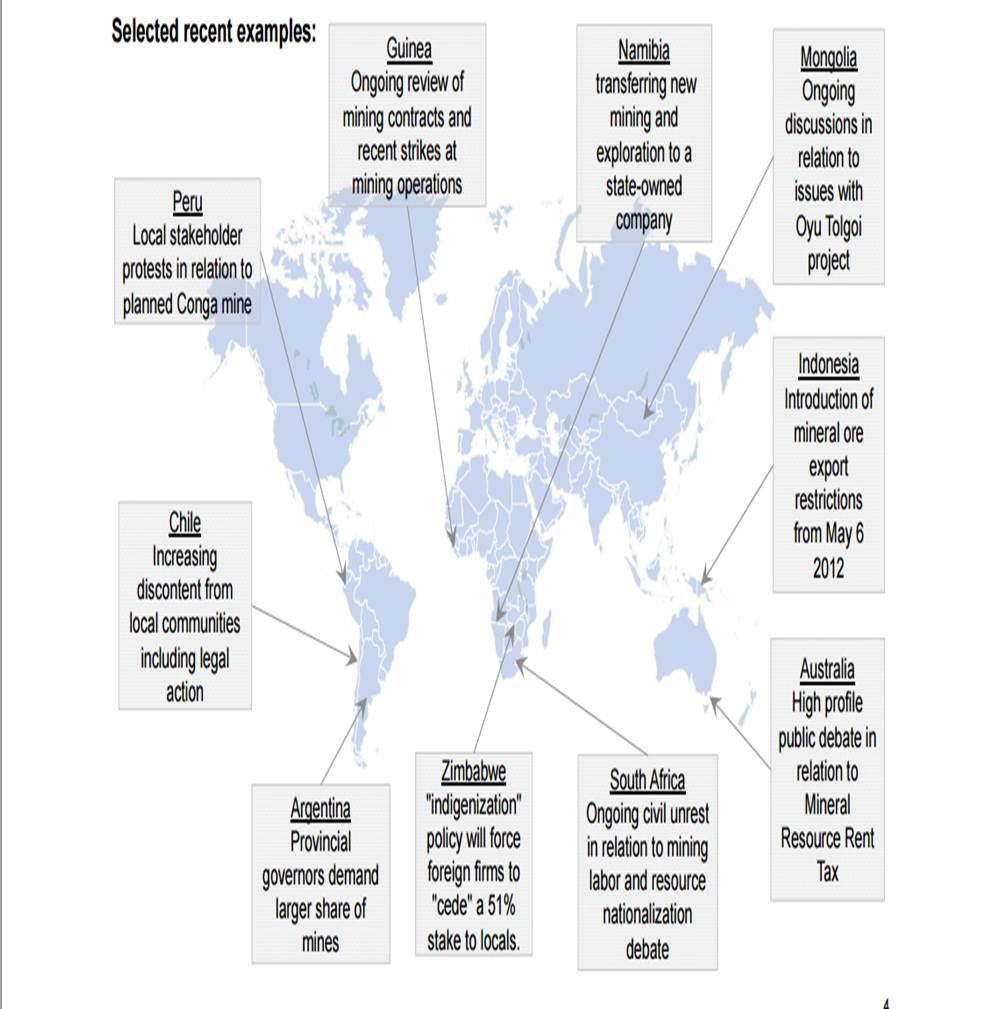
 Sitting in a two day workshop on Resource Governance convened by the International Resource Panel, in Davos. While the snow falls all around us, I am struck we are having this discussion within a country that is used as a base by the largest commodity traders in the world, and where the bulk of the profits from mining in Africa land up, for investment elsewhere. The concept note is written by an amazing Mozambican based in Rwanda, Antonio Pedro, who works for the UN Economic Commission for Africa. Its a remarkable overview of the challenge from what could be called a neo-extractivism perspective, i.e. a critique of exploitative extravism that contributes little. The result is the contestations of mining reflected in the World Economic Forum diagram attached to this post. Using the adoption of the Sustainable Development Goals, Pedro is arguing for quite radical changes that will make mining and their products contributors to sustainable development. He started his presentation by reminding us all about the Marikana massacre. But his paper does not question the right of the extractive industries to exist. Hopefully the Latin American representatives here will introduce the notion of post-extrativism, i.e. a transition to diversified economies premised on reduction of dependence on and eventual closure of extractive industries. The ECLAC representative in his opening did refer to ‘resource nationalism’ – that term is current on the African continent, but it can mean two things – neo-extrativism (i.e. how to capture more benefits from extractivism), or post-extravism (using resource rents to fund the transition to diversified economies not dependent on extractivism).
Related to this resource governance discussion is a new report released by the IRP yesterday entitled International Trade in Resources. This amazing report led by Marina Fischer-Kowalski shows that there is a declining number of countries that are still net exporters of resources and a rising number who are net resource importers. If these trends continue, the world will face increasing instability. I cannot help thinking that we need a UNFCC for resources – a global resource governance agency where the terms of future resource extraction and use are negotiated and managed. These resources are, after all, part of the commons. Should they continue to be exploited for the benefit of the few?
Recent Comments